La lógica de clasificación más utilizada en el sector se basa en el modo de desplazamiento y las condiciones de uso:
- Elevador de tijera fijo
La base está fijada directamente al suelo y no se puede mover. Su capacidad de elevación es elevada y su recorrido de elevación es relativamente limitado. Se utiliza principalmente para elevar mercancías en líneas de montaje de talleres, para la carga en fosos y en puestos de trabajo fijos en almacenes. Pertenece a la categoría de equipos de elevación de materiales y, por lo general, no se utiliza para operaciones a gran altura con personal a bordo. - Elevador de tijera móvil (de tracción)
Están equipados con ruedas giratorias, se desplazan empujándolos manualmente y algunos pueden remolcarse desde el exterior para su transporte en remolque; requieren una fuente de alimentación externa. Su estructura es ligera, adecuada para entornos interiores y exteriores con operaciones de frecuencia inestable y moderada, y se utilizan habitualmente para tareas de mantenimiento en centros comerciales y fábricas. - Plataforma elevadora eléctrica de tijera totalmente autopropulsada
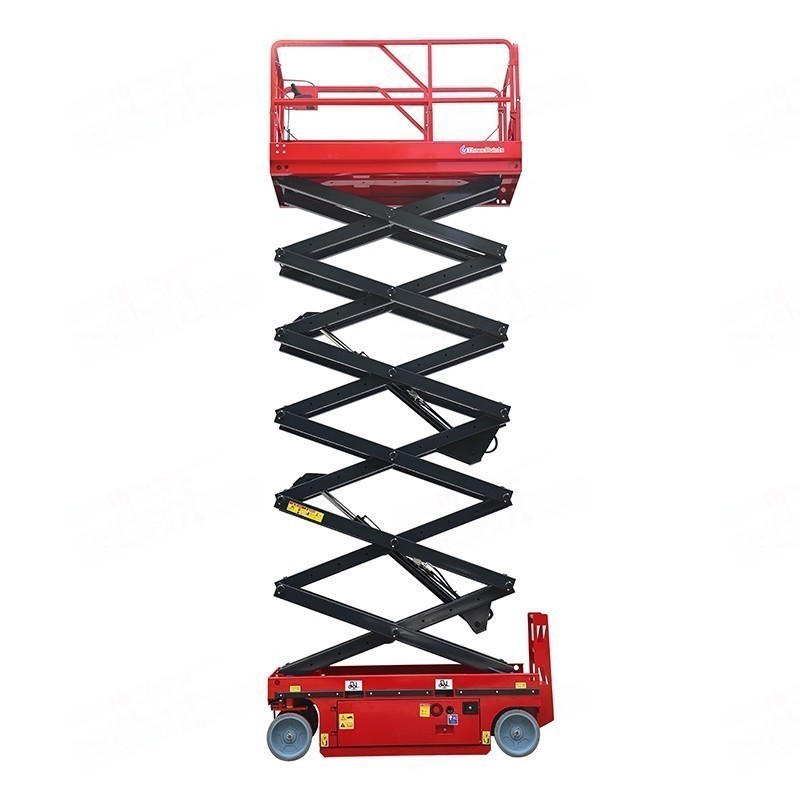
Gracias a su motor de desplazamiento, el operador puede caminar, girar y elevar la plataforma sin necesidad de fuerza externa. Alimentado por baterías, con bajo nivel de ruido y sin emisiones de gases de escape, es adecuado para operaciones a gran altura en terreno llano, en fábricas, supermercados y salas de exposiciones. Es la plataforma de trabajo en altura tripulada más habitual del mercado. - Plataforma elevadora de tijera autopropulsada todoterreno (con orugas o ruedas)
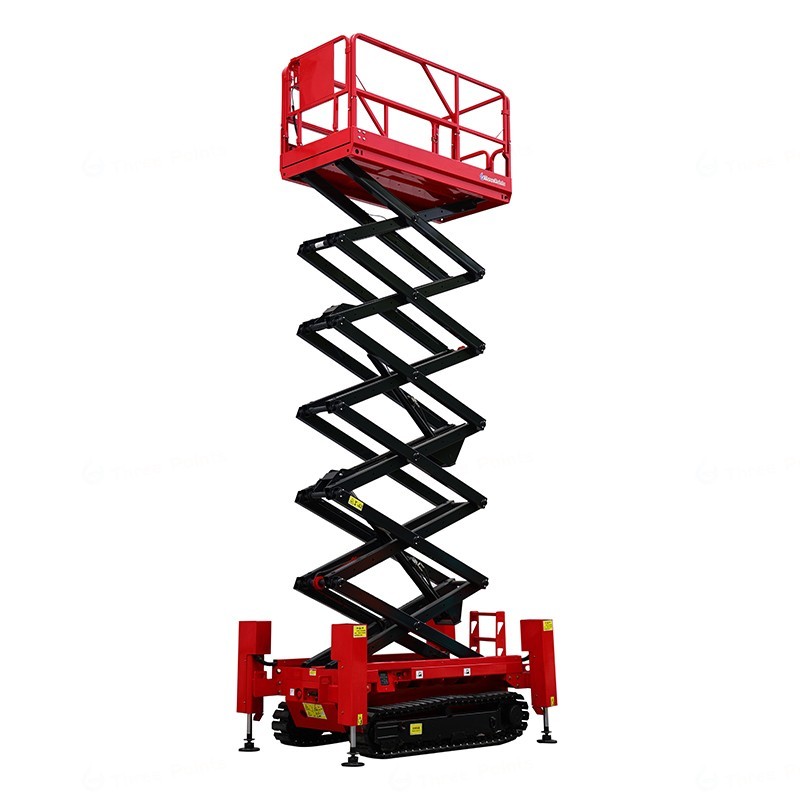
Propulsión diésel/eléctrica de litio, neumáticos todoterreno de dibujo ancho o chasis con orugas, con capacidad para escalar pendientes, adecuado para obras con barro y terrenos irregulares al aire libre, obras de construcción e infraestructuras al aire libre, resistente a los baches y capaz de funcionar sobre terrenos no compactados. - Elevador de tijera montado en vehículo
El mecanismo de tijera se instala en el chasis de un coche y se apoya en el vehículo para lograr desplazamientos rápidos y de larga distancia, con una gran maniobrabilidad; se utiliza habitualmente para el alumbrado público municipal, la vigilancia del tráfico y las tareas de inspección y mantenimiento en exteriores a larga distancia.